If you’ve pulled a set of fuel injectors off an LS engine or a classic small-block and found them coated in varnish, leaking at the base, or just old enough to make you nervous — you’re in the right place. A fuel injector is the electro-mechanical valve that squirts precisely metered fuel into your engine. Over time, the small rubber seals (called O-rings) that keep that valve leak-free harden and crack, and a tiny plastic cap at the tip called a pintle cap can wear or distort and alter the spray pattern. The good news: you don’t always have to buy new injectors. A rebuild kit — typically $5–$25 per injector — replaces those wear items and can bring a functioning injector back to like-new sealing condition. This guide breaks down exactly what’s in those kits, how to decide whether rebuilding makes sense for your build, and which parts to specify for LS and small-block swaps.
What’s Actually in a Fuel Injector Rebuild Kit
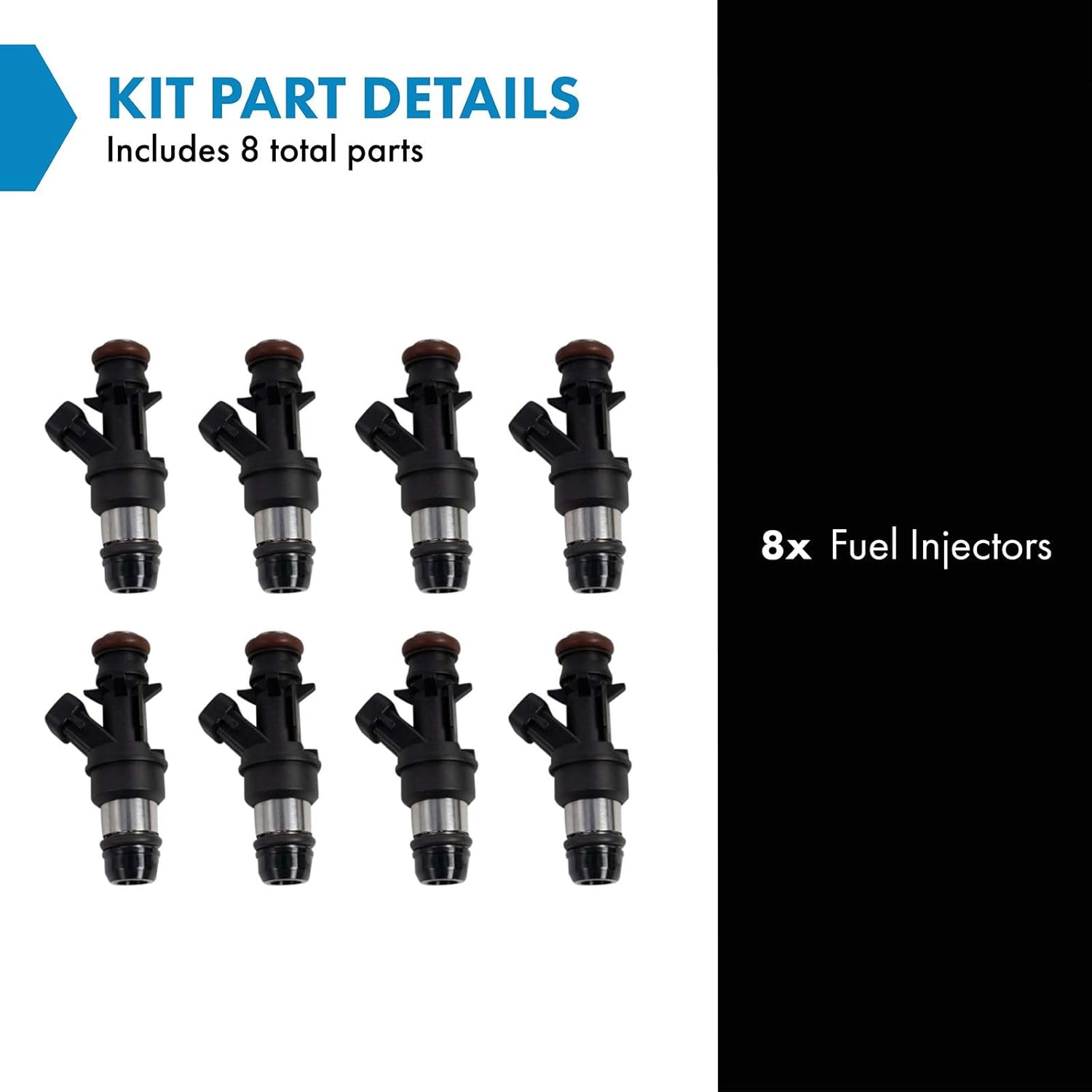
Before you can make a smart buy decision, you need to know what you’re buying. Most rebuild kits for EV1 (common on early LS trucks and Gen III engines), EV6 (Gen IV LS, LS3, LS7), and Bosch-style small-block injectors include some combination of the following:
Upper O-ring: Seats the injector body in the fuel rail and prevents fuel from spraying back toward the rail fitting. This is almost always an 11–14mm Viton or Buna-N rubber ring. On LS applications, the upper O-ring diameter is standardized, but the durometer (hardness rating) matters — softer O-rings conform better initially, harder ones last longer under sustained heat.
Lower O-ring: Creates the seal between the injector tip and the intake manifold port. This one sees direct combustion-side heat cycling and is statistically the more common failure point. On Gen III/IV LS injectors, the lower O-ring diameter is typically 14.7mm. On classic small-block applications using TBI (throttle body injection) or aftermarket multi-port conversions, lower O-ring dimensions vary by manufacturer’s adapter.
Pintle cap (or pintle protector): A small plastic basket at the injector tip that shapes and protects the spray pattern. Not every kit includes one; look for this explicitly in the product listing if spray quality matters to you — and it should, especially on port-injected builds where fuel distribution across cylinders directly affects AFR balance.
Filter basket: A fine-mesh screen on the inlet end of the injector. These are often omitted from budget kits. Worth specifying separately if your fuel system has had any contamination history.
Retaining clip: Holds the injector into the rail or manifold boss. Usually stamped spring steel. Cheap, easily damaged on removal — having spares matters.
Spacer/micro O-ring: Smaller secondary seals found on some EV6 and Bosch-style injectors to seal internal fuel passages. Many budget kits skip these; premium kits include them.
According to Engine Labs’ LS Injector Service and Flow Testing Overview, the lower O-ring and pintle cap are responsible for the majority of injector-related drivability complaints logged during LS swap diagnostics — rough idle, erratic short-term fuel trim, and unexplained lean conditions at idle are classic symptoms of a compromised lower seal or degraded pintle cap.
The Rebuild vs. Replace Decision: How to Run the Math
Here’s where most builders stall out. You’ve got eight injectors, some unknown service history, and a build budget that’s already been stretched by headers and a wideband. The question is: do you rebuild what you have, or buy fresh injectors?
The answer isn’t always “rebuild.” It depends on injector condition, application demand, and what you actually know about the injector’s flow history.
By the Numbers
| Scenario | Rebuild Kit Cost (×8) | Replacement Injectors (set of 8, matched) | Verdict |
|---|---|---|---|
| LS truck injectors, unknown miles, street build | ~$80–$160 | $180–$400 (remanufactured) | Rebuild wins if flow-tested first |
| LS3 injectors, high-HP boost application | ~$120–$200 | $400–$900 (new OEM or matched) | Replace — don’t risk flow variance |
| SBC TBI conversion, moderate street use | ~$40–$80 | $150–$250 (reman) | Rebuild wins |
| Used injectors, unknown source, no flow data | Any kit cost | $180–$900 | Replace — no baseline to rebuild to |
The break-even logic is simple: a rebuild kit only makes sense if the injector body itself is serviceable. If the needle, seat, or solenoid winding is compromised, you’re installing new O-rings on a part that will still misfire, leak-down, or dead-short. As OnAllCylinders explains in their article Fuel Injector Basics: What Every Builder Should Know, rebuild kits address sealing and spray geometry — not injector electrical function or internal fuel delivery precision.
Flow-test first, then decide. If you can’t flow-test the injectors yourself, professional injector cleaning and flow-balancing services typically run $15–$25 per injector and give you a baseline. Popular Mechanics’ framework for rebuild-vs-replace decisions applies the same logic here as to any wear component: if you can’t characterize the core’s condition, the cost of a failed rebuild usually exceeds the cost of a replacement.
Comparing Rebuild Kit Tiers: Budget, Mid-Range, and Premium
Not all rebuild kits are the same, and the difference between a $6 kit and a $22 kit often comes down to compound quality, completeness, and whether the pintle cap is included. Here is how the three tiers stack up for LS and small-block applications.
Budget Rebuild Kits
Budget kits — typically $5–$8 per injector — cover the upper and lower O-rings and a retaining clip. They are usually Buna-N compound and omit the pintle cap, filter basket, and micro O-ring. For a pump-gas street build where the injectors have been flow-tested and confirmed healthy, a budget kit gets the sealing job done. The tradeoff is compound durability: Buna-N degrades faster under E10 and E15 exposure than Viton, so these kits carry a shorter effective service life on modern pump gas blends. They are the right call only when you have a confirmed-good injector on a confirmed-pump-gas tune and you need to control costs tightly.
 product image](/images/external/252852edbe56.jpg)
HiSport
$16.77
In stock on Amazon
Check price on AmazonMid-Range Rebuild Kits
Mid-range kits — typically $10–$16 per injector — step up to Viton compound O-rings, add the pintle cap, and usually include the filter basket. This is the tier Hot Rod Network’s article How to Clean and Test Fuel Injectors identifies as the practical sweet spot for most street and mild performance builds: you get the sealing benefit of Viton’s ethanol resistance, the spray-pattern benefit of a fresh pintle cap, and a complete part count without moving into specialist pricing. For a street LS swap or a small-block TBI conversion on E10 pump gas, mid-range kits cover all the bases.
FainWan
$16.99
In stock on Amazon
Check price on AmazonPremium Rebuild Kits
Premium kits — typically $18–$25 per injector — add the EV6 micro O-ring (the secondary internal seal that budget and many mid-range kits omit), use high-durometer Viton throughout, and are often sold in matched sets with documented compound certifications. Motor Trend’s LS Swap Guide: Fuel System Essentials notes that matched injector flow variance of ±1–2% is essentially non-negotiable for consistent AFR on high-output builds; premium rebuild kits paired with a post-rebuild flow-matching service are the only rebuild-path option that gets you close to that spec. If you are running E85, a flex-fuel tune, or a boosted application under 450 RWHP where you’ve already confirmed injector electrical health, a premium kit is the correct investment. Above 450 RWHP, replacement with a factory-matched set is the better call regardless of kit tier.
TRQ
$164.95
In stock on Amazon
Check price on AmazonSpecifying the Right Kit: LS vs. Small-Block Applications
Not all rebuild kits cross-apply. Buying the wrong O-ring diameter means you’re either sealing on a ridge (too large) or not sealing at all (too small). Here’s how to specify correctly.
LS Applications (Gen III / Gen IV)
EV1-style injectors (common on LS1, early LS truck, Vortec applications): Upper O-ring is typically a No. 10 Viton O-ring; lower is a No. 8 or 9 depending on manifold. Most kit manufacturers label these as “LS1/LS6/Vortec” fitment. Look for Viton compound, not Buna-N, if the build will see E85 — Buna-N degrades more rapidly in ethanol blends.
EV6-style injectors (LS2, LS3, LS7, LS9, and most Gen IV): Larger body diameter, different upper O-ring spec. These also use a secondary internal micro O-ring that affects leak-down — a detail Hot Rod Network’s article How to Clean and Test Fuel Injectors specifically flags as frequently missed in cheaper rebuild kits. Confirm the kit explicitly lists the EV6 micro O-ring before purchasing.
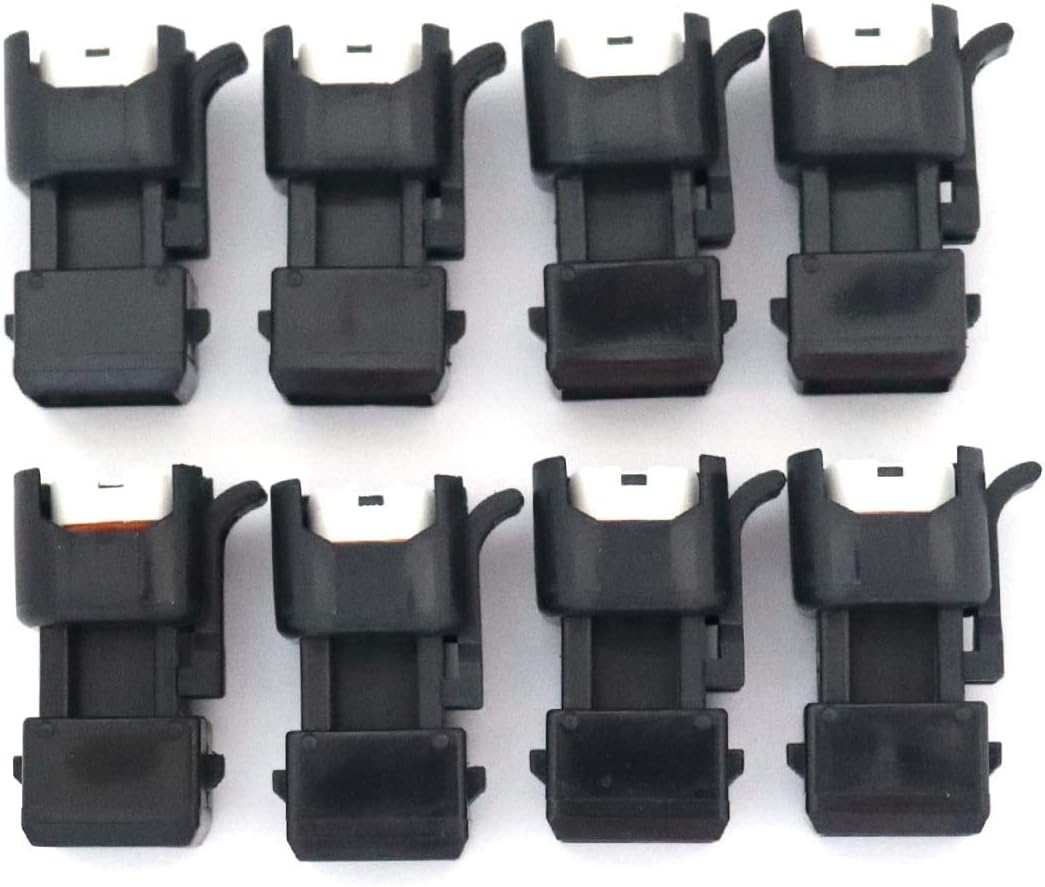
Connector pigtail note: EV1 and EV6 injectors use different electrical connectors. If you’re swapping injectors between LS generations as part of a fuel system upgrade, factor in pigtail adapters — this is a wiring task separate from the rebuild kit question, but it comes up constantly in LS swap planning.
Small-Block Chevy and Ford Applications
Classic small-block swaps — think a first-gen Camaro running an aftermarket multi-port injection system on an iron-head 350 — typically use Bosch-style injectors specified by the EFI kit manufacturer (Holley, FiTech, FAST, etc.). These have their own O-ring dimensions, and the rebuild kits are usually sold by the EFI system manufacturer directly or through their authorized distributors.
Don’t assume cross-compatibility. Holley Sniper 2 injectors are not the same bore geometry as FAST EZ-EFI injectors. When in doubt, spec by injector part number, not by engine family. The injector’s part number is stamped on the body or available in the EFI kit’s component list. Engine Labs’ LS Injector Service and Flow Testing Overview reinforces this: matching the rebuild kit to the injector OEM part number is the only reliable specification method.
Material Matters: Viton vs. Buna-N, and Why It’s Not Trivial
The O-ring compound is the most under-discussed spec in rebuild kit buying, and it’s genuinely consequential if your build runs anything other than straight pump gasoline.
Buna-N (Nitrile): Standard compound, lower cost, good resistance to petroleum-based fuels. Starts to degrade with sustained E85 exposure. Acceptable for pump-gas-only builds.
Viton (FKM): Better chemical resistance across ethanol, methanol, and higher aromatic content fuels. Runs $2–5 more per kit. If there’s any chance your build will see corn ethanol blends — even E10 or E15 — Viton is the right call. Engine builders running flex-fuel tunes on LS platforms should treat Viton as mandatory, not optional.
EPDM: Occasionally found in OEM sealing applications, not typically used in rebuild kits for fuel injection. If you see it listed, verify the kit is actually intended for fuel system use.
The practical guidance from OnAllCylinders’ Fuel Injector Basics: What Every Builder Should Know is worth repeating: if you’re uncertain which compound is in a kit, contact the supplier before buying. The price difference between Buna-N and Viton kits is small; the cost of pulling and resealing injectors a second time is significant.
If X, Then Y: Your Decision Rules
This is where you want to land before you click buy. Here’s the clear framework:
If your injectors are from a known-source engine with documented service history and under 80,000 miles → rebuild. Buy a full mid-range or premium kit (upper O-ring, lower O-ring, pintle cap, filter basket, clip) in the correct compound for your fuel. Flow-test before and after if you have access to a service.
If your injectors are from an unknown-source pull or salvage → replace. No rebuild kit recovers an injector with unknown electrical health or uncharacterized flow variance. Budget for a matched reman set.
If you’re building a high-HP, boosted, or E85 application over 450 RWHP → replace with a matched, flow-tested set. Rebuild kits aren’t the right tool for an application where ±2% flow variance matters. Spec injectors sized for your target horsepower and have them flow-matched before installation.
If you’re doing a budget street swap and the injectors are functionally sound → rebuild is the right spend. An $80–$160 kit investment on a $400–$700 injector set is solid economics. Confirm Viton compound and don’t skip the pintle caps.
If you’re specifying a new EFI kit and the injectors are brand-new in the box → skip the rebuild kit entirely. New injectors don’t need new seals; your first-install budget goes further toward a wideband O2 sensor or proper fuel pressure regulator.
The rebuild-vs-replace question is really a confidence question: how well do you know what’s inside that injector? If the answer is “not well enough,” the cost of a matched replacement set is the smarter insurance premium than a rebuild kit that leaves the unknowns intact.
All pricing referenced reflects May 2026 market conditions. Injector pricing varies by application, supplier, and whether units are new OEM, remanufactured, or used. Cross-reference our spec sheet for current kit pricing before purchasing.