If you’ve decided to drop an LS engine — General Motors’ legendary small-block V8 family that powered everything from Corvettes to pickup trucks — into a classic muscle car or custom build, you’ve probably already figured out that the engine itself is only half the project. The other half is the wiring. A standalone wiring harness is a pre-built electrical system designed specifically to run your LS engine outside of the factory vehicle it came from, without the miles of extra wiring that original GM harnesses carried for dashboard displays, airbags, and body electronics you don’t need. Think of it as a clean, purpose-built nervous system for your swap. Get the harness right and the engine starts, idles, and pulls cleanly. Get it wrong and you’re chasing gremlins for months. This guide walks you through the three decisions that matter most — drive-by-cable vs. drive-by-wire throttle control, transmission harness compatibility, and what you actually get when you buy a budget kit — so you can make a confident call before you spend a dollar.
| EDITOR'S PICK[T56 DBC LS1 LS6 Standalone Wiri…](https://www.amazon.com/dp/B0B8SF983B?tag=greenflower20-20) | Mid-tier[Michigan Motorsports LS Swap Wi…](https://www.amazon.com/dp/B07KRMLSY5?tag=greenflower20-20) | Budget pickStandalone Wiring Harness | |
|---|---|---|---|
| Drive-by-Cable | ✓ | — | ✓ |
| Drive-by-Wire | ✗ | — | ✗ |
| Transmission | Manual/TH400 | — | 4L60E |
| PCM Type | Red/Blue | — | Red/Blue |
| OBD2 Port | — | ✓ | — |
| Injector Type | EV1 | — | — |
| Price | $119.21 | $94.99 | $87.89 |
| See on Amazon → | See on Amazon → | See on Amazon → |
DBC vs. DBW: The First Decision That Splits Every LS Swap
This is where most intermediate builders get tripped up, because the terminology sounds more intimidating than the concept actually is.
DBC (Drive-By-Cable) means a physical throttle cable runs from your gas pedal to a throttle body on the engine — the same way carbureted engines worked for decades. The computer still controls fuel delivery and ignition timing, but the throttle plate itself opens mechanically when you push the pedal. LS engines built roughly between 1997 and 2007 — the Gen III family, including the iron-block 4.8L, 5.3L, and the aluminum LS1 and LS6 — were DBC from the factory.
DBW (Drive-By-Wire), also called electronic throttle control (ETC), eliminates the cable entirely. A sensor on the pedal sends a signal to the ECU, which commands a small motor inside the throttle body to open the plate. Gen IV engines from approximately 2005 onward — including the LS2, LS3, LS7, and the truck-based L92 and L99 — are predominantly DBW from the factory.
Why does this split matter for your harness purchase? Because a DBC harness and a DBW harness are fundamentally different animals. DBW requires two additional wires to the throttle body motor, a separate pedal position sensor (PPS) circuit, and an ECU that supports electronic throttle control. As OnAllCylinders has covered in its LS throttle system editorial content, swapping a DBW engine onto a DBC harness is not a simple adapter fix — it requires either converting the engine to a cable throttle body or running an ECU with full ETC support and a matching harness.
The practical decision rule:
- Gen III engine (LS1, LS6, iron 5.3/4.8) → buy a DBC harness. Simpler wiring, broader ECU compatibility, and easier to tune with entry-level systems.
- Gen IV engine (LS2, LS3, LS7, L92, L99) → buy a DBW harness OR budget for a cable-throttle conversion. As Hot Rod’s LS swap wiring editorial coverage has noted, LS3 cable throttle bodies typically run in the $150–$300 range. Converting a DBW engine to DBC is legal and common, but it requires the right intake manifold and a separate idle air control (IAC) circuit, which adds complexity.
- Budget builders with a Gen IV core: the conversion path is real money but buys you a simpler harness ecosystem. Run the math before you commit.
4L60E vs. 4L80E: Transmission Integration Is Not an Afterthought
A standalone harness that controls your LS engine doesn’t automatically control your transmission. If you’re running an electronically controlled automatic — and most LS-era GM transmissions are — you need either a harness that integrates transmission control or a separate transmission controller wired in parallel.
The two most common LS-era automatics:
| Transmission | Torque Capacity | Common Application | Harness Connector |
|---|---|---|---|
| 4L60E | ~350 lb-ft (street) | LS1 Camaros, C5 Corvettes, trucks | 18-pin blue connector |
| 4L80E | ~450 lb-ft+ | HD trucks, high-HP builds | 20-pin gray connector |
The 4L60E is lighter, narrower, and less expensive — used units in usable condition run $300–$600 in the current mid-2026 market. The 4L80E is considerably more robust but heavier (approximately 236 lbs vs. 162 lbs dry) and physically longer, which creates fitment challenges in tight transmission tunnels. Engine Labs’ LS swap wiring editorial content consistently flags the 4L80E’s overall length as a fabrication consideration in A-body and F-body swaps where the driveshaft loop-to-crossmember distance is fixed.
Harness Tiers: What Budget, Mid-Range, and Full-System Kits Actually Deliver
This is the conversation nobody has in the product listing. The phrase “plug-and-play” is the most abused term in the LS swap market. Here is an honest breakdown of what that actually means across price tiers, drawing on published kit documentation from Holley Performance and editorial coverage from Engine Labs, Hot Rod Network, OnAllCylinders, and Motor Trend.
Budget Harnesses ($250–$450)
Entry-tier harnesses from generic offshore suppliers or bare-bones domestic kits typically cover engine-only wiring: injectors, coils, crank sensor, cam sensor, MAP sensor, coolant temp, and an O2 sensor circuit. Transmission control is either absent or handled by a single generic VSS (vehicle speed sensor) output. To get full 4L60E or 4L80E electronic shift control, you will need a standalone transmission controller — units such as the TCI EZ-TCU or the US Shift Quick 4 add $350–$600 to the build cost.
What budget kits frequently omit or charge extra for: wideband O2 bung and controller integration, fan relay and coolant fan output circuit, fuel pump relay and priming circuit, TAC module wiring for DBW engines, knock sensor leads, purge solenoid and EVAP system wiring, and A/C compressor clutch output.
The knock sensor omission deserves specific attention. Holley Performance’s published documentation for the Terminator X ECU series states that the knock retard function requires properly wired knock sensors to protect the engine under detonation. A harness that omits this wiring is not saving you money — it is shortening engine life on pump gas, particularly on any boosted or high-compression application. Engine Labs’ LS wiring editorial coverage makes the same point directly.
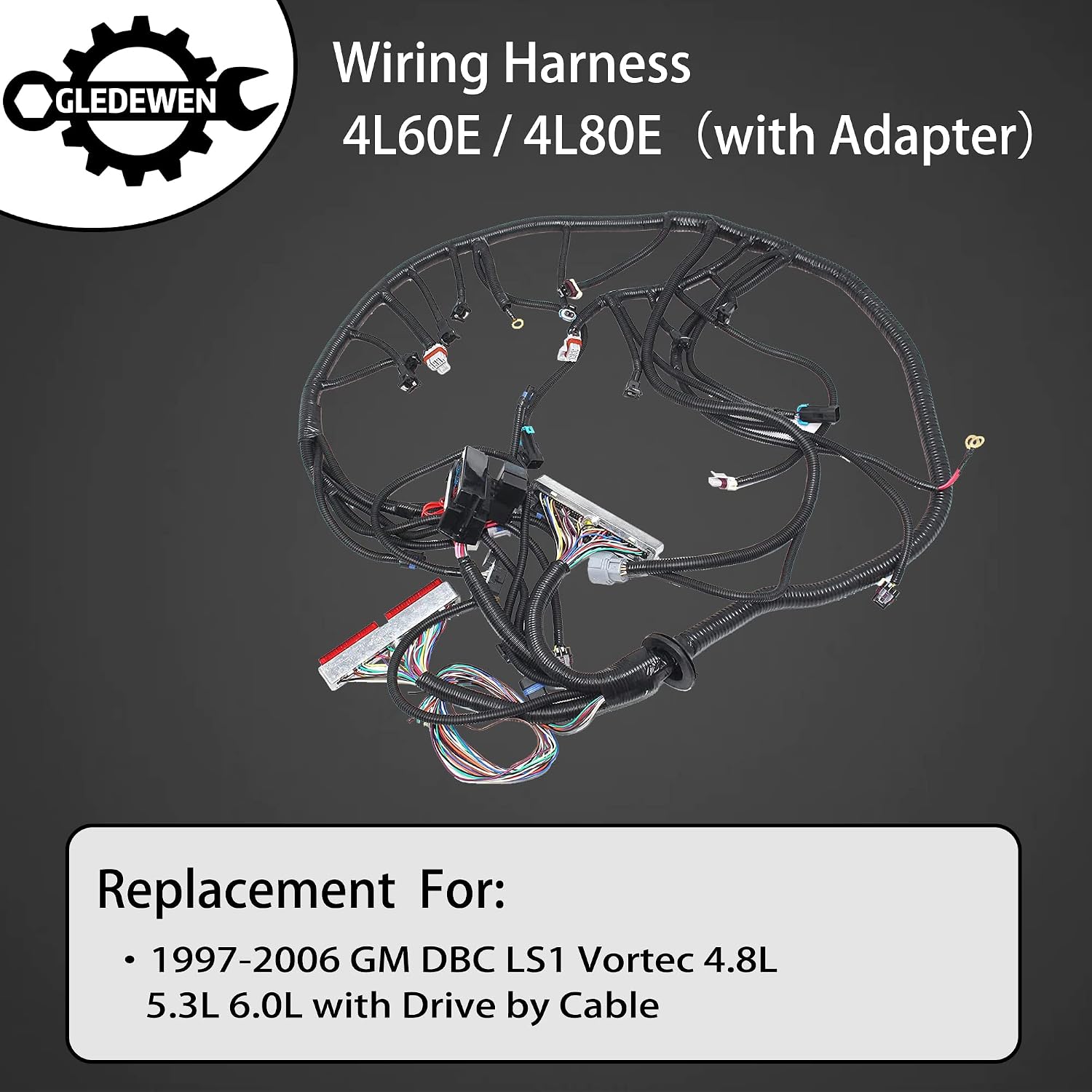
Standalone
$87.89
In stock on Amazon
Check price on AmazonMid-Tier Harnesses ($600–$900)
Mid-range harnesses from domestic suppliers — PSI Conversion Harnesses and Speartech’s base LS swap kits are the consistent references in Hot Rod’s and Engine Labs’ builder editorial coverage — are typically built specifically for a donor ECU and engine combination. Their mid-range kits often include transmission wiring for either the 4L60E or the 4L80E, but you must specify this at order time. These harnesses are not interchangeable post-purchase, and ordering the wrong transmission spec is a common and expensive mistake.
At this tier you generally gain: wideband O2 provisions, fan relay outputs, fuel pump priming circuits, and knock sensor leads. What remains inconsistent across suppliers at this price point: TAC module integration for DBW engines (verify explicitly before ordering) and EVAP/purge solenoid circuits, which are sometimes deleted as emissions-irrelevant for race-only builds but matter for street registration.
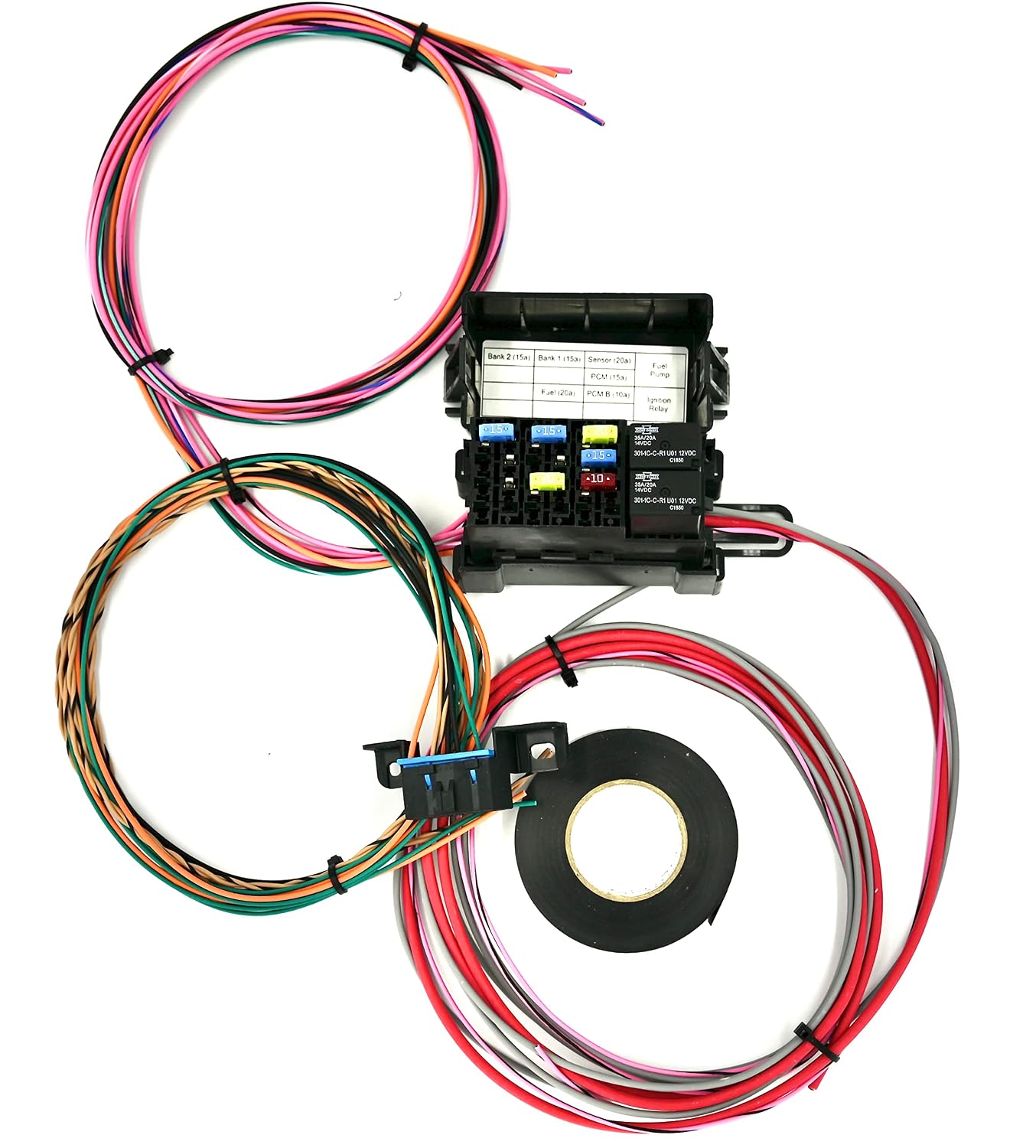
Michigan
$94.99
In stock on Amazon
Check price on AmazonFull-System Harnesses ($1,000–$1,800+)
Full-system platforms — Holley’s Terminator X Max, Holley HP EFI with transmission control, and purpose-built Speartech custom configurations — integrate both engine and transmission control through a single ECU and harness. Per Holley Performance’s published Terminator X Max product documentation, the platform supports full 4L60E and 4L80E control including torque converter lockup logic from a single controller. Motor Trend’s LS swap editorial content has cited the Terminator X Max as a common recommendation for builders who want one box to handle both systems.
For high-horsepower applications (500+ hp, boosted, or nitrous), Holley’s HP EFI documentation specifies that closed-loop knock retard is table-based and requires functional sensor inputs. Full sequential injection, wideband O2 integration, and knock sensor wiring are not optional features at this power level — they are the minimum viable configuration. Holley’s Dominator platform, noted in company documentation for multi-throttle-body and individual-runner setups, represents the upper boundary of this tier and is the reference point for pro-touring or endurance-racing wiring investments.
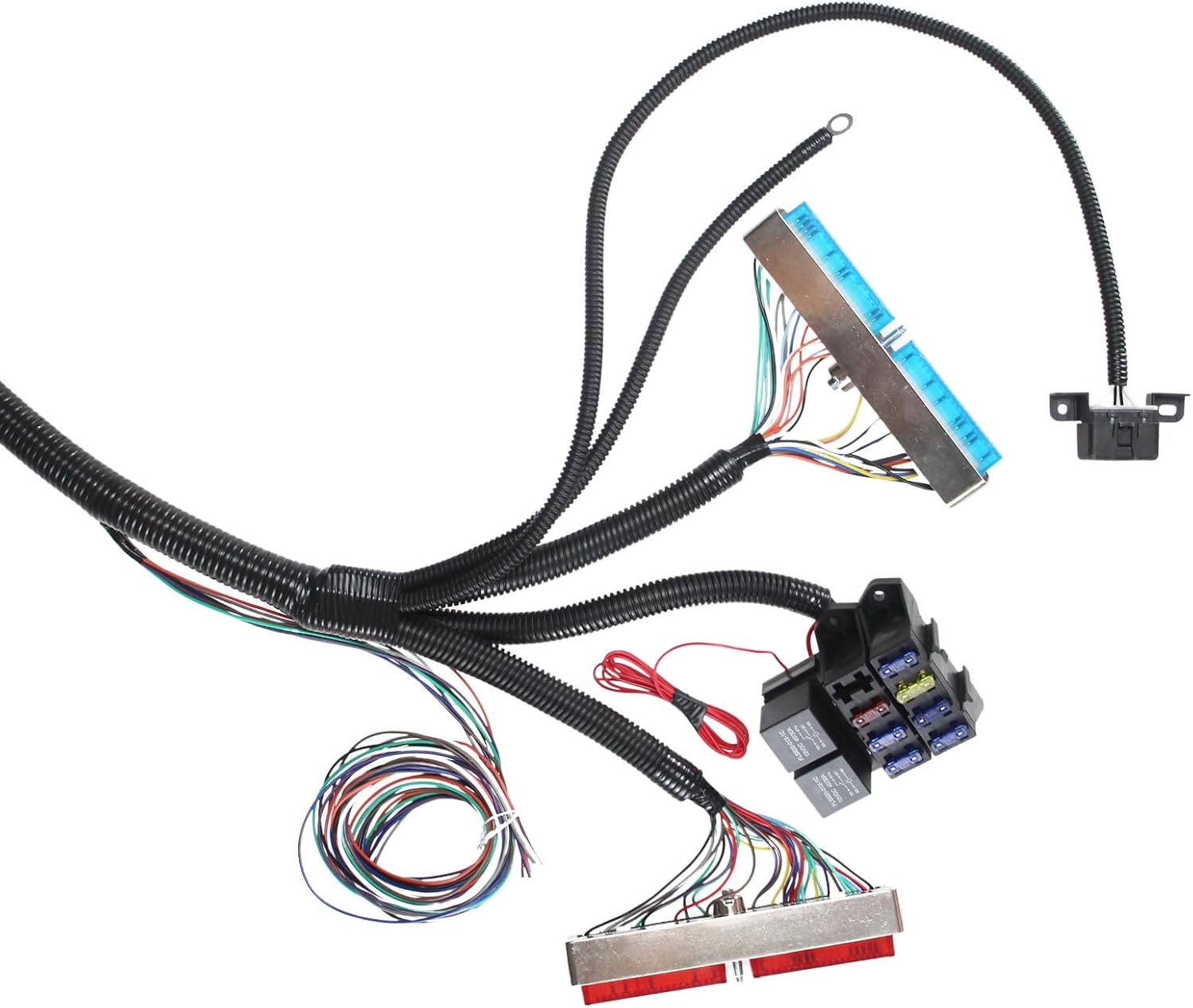
T56
$119.21
In stock on Amazon
Check price on AmazonBy the Numbers: All-In Wiring Costs by Build Tier
| Build Tier | Harness | ECU (if separate) | Trans Control | Approximate Total |
|---|---|---|---|---|
| Budget DBC, manual trans | $300–$450 | $400–$600 | N/A | $700–$1,050 |
| Street DBC, 4L60E | $600–$900 | Included in some kits | Included or +$400 | $1,000–$1,300 |
| Pro-Touring DBW, 4L80E | $900–$1,200 | $1,200–$2,200 | Included in Holley X Max | $1,800–$2,800 |
These figures reflect mid-2026 market pricing and assume new harnesses and ECUs. Used ECU units (verified, flashed to your combination) can reduce the ECU line by 20–35%, but factor in bench-testing time and the risk of an unverified donor tune.
The Decision Framework: Match Your Harness to Your Actual Build
At this point you have the variables. Here is how to run the decision tree without second-guessing yourself on the shop floor.
DBC Gen III engine + manual transmission + budget ECU: Buy an entry-tier harness from a domestic supplier — PSI and Speartech base kits are the consistent editorial references for this application. Verify that knock sensor leads are included before ordering. This is a legitimate, functional combination that has powered countless clean street builds.
DBC Gen III engine + 4L60E + street tune: Buy a mid-tier integrated harness with transmission wiring specified at order time, or move to a Holley Terminator X Max for a single-box solution. Do not mix a budget engine harness with a separate $400 TCM if the integrated option costs only $200 more all-in — the math rarely favors the piecemeal path once labor is considered.
DBW Gen IV engine (LS3, L92) + either transmission: Either select a DBW-capable full-system harness — Holley’s Terminator X Max explicitly supports electronic throttle control per published Holley product documentation — or convert to a DBC throttle body first. Budget the conversion parts ($150–$300 per Hot Rod’s LS swap editorial coverage) against the premium for a DBW-capable harness. Builders running sub-$2,000 ECU budgets frequently find the DBC conversion simpler and more broadly supported by independent tuners.
High-horsepower street/strip (500+ hp, boosted, nitrous): Holley HP EFI or HP EFI with transmission control, full sequential injection, and wideband O2 integration are the minimum viable configuration. Do not accept a harness without wideband provisions or knock sensor leads at this power level. The knock retard function is only as good as the sensor data feeding it, as Holley’s own HP EFI documentation makes explicit.
Pro-touring or endurance-racing application: A purpose-built standalone harness keyed to the specific donor ECU and engine combination, with full transmission control integration, is the correct investment. Speartech custom-specified builds and Holley’s Dominator platform are the editorial references for this segment. Budget $2,500 or more for the wiring system alone, and treat it accordingly — this is not a line item to economize on when the car will see sustained high-RPM operation and corner-weight tuning.
The harness is not the exciting part of an LS swap. Nobody photographs their connector seals. But it is the part that determines whether your build starts on the first crank or spends three weekends in diagnostic mode. Matching the right harness to your specific engine generation, throttle control type, transmission, and ECU — and verifying what is actually in the box before the build date — is the unglamorous discipline that separates a clean, driveable swap from a perpetual project.